

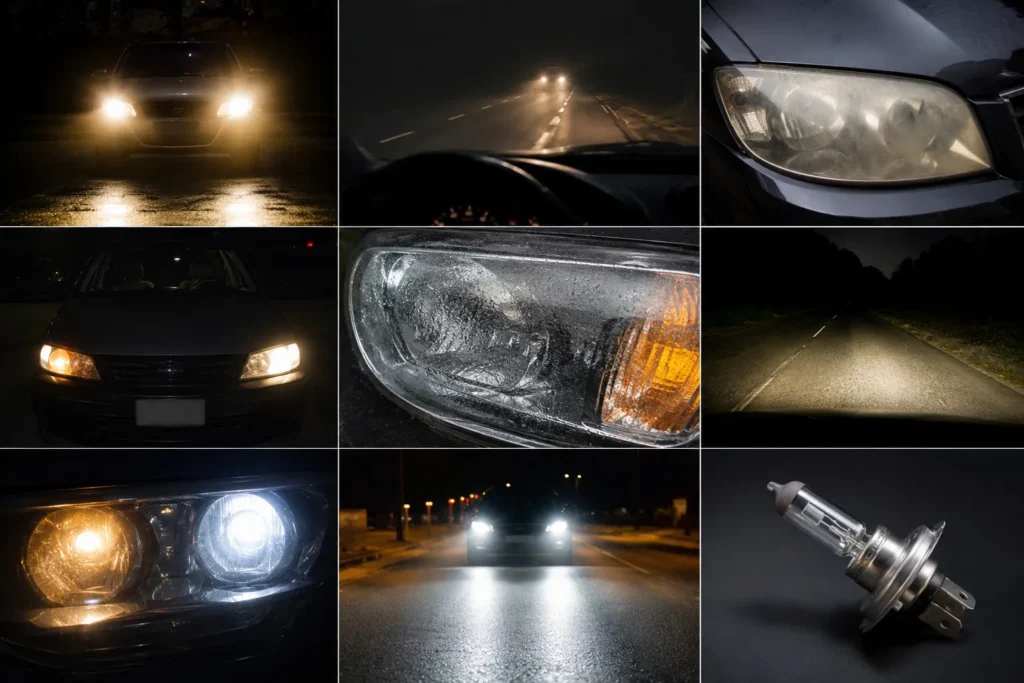
Car Headlight Bulbs play a critical role in road safety. The National Highway Traffic Safety Administration reported more than 38,000 traffic fatalities in the United States during 2024. Poor visibility remains a contributing factor in many nighttime crashes. Properly functioning headlights help drivers identify hazards, pedestrians, and road signs earlier.
Most halogen bulbs last between 500 and 1,000 hours. High-intensity discharge bulbs typically last 2,000 hours, while LED systems can exceed 20,000 hours. Even durable bulbs gradually lose brightness over time. Drivers often overlook the warning signs until visibility becomes dangerous.
We regularly advise vehicle owners to inspect their lighting systems every six months. Early replacement improves safety and prevents unexpected failures. Many states also require working headlights to meet inspection standards.
Understanding the common signs of worn Car Headlight Bulbs helps drivers maintain clear visibility. Recognizing these symptoms can prevent costly repairs and improve driving confidence during nighttime and severe weather conditions.
Strong headlights improve reaction time and reduce accident risks. According to the Insurance Institute for Highway Safety, better illumination allows drivers to detect objects up to 28% sooner. That extra distance can prevent collisions.
Modern vehicles use several bulb technologies. Each offers different lifespans and brightness levels. Regular inspections help maintain consistent lighting performance.
Important benefits include:
Improved nighttime visibility.
Better performance during rain and fog.
Increased pedestrian detection.
Reduced eye strain while driving.
Compliance with state safety regulations.
| Bulb Type | Average Lifespan | Typical Brightness |
|---|---|---|
| Halogen | 500-1,000 hours | 700-1,200 lumens |
| HID Xenon | 2,000 hours | 3,000 lumens |
| LED | 20,000 hours | 2,000-4,000 lumens |
| Laser | 30,000 hours | Up to 4,500 lumens |
Routine maintenance ensures these lighting systems continue operating efficiently.
Dim headlights often develop gradually. Drivers may not notice the decline because the change occurs slowly. Halogen filaments weaken over time, reducing light output.
Our experience with vehicle maintenance shows that brightness losses become noticeable after approximately 700 operating hours. Older bulbs can produce 20% less illumination than new ones.
Signs of dim headlights include:
Difficulty seeing road markings.
Reduced visibility during rain.
Increased glare sensitivity.
Trouble identifying signs at longer distances.
Replacing both bulbs together maintains balanced lighting and improves safety.
Flickering is a common warning sign. Internal filament damage or loose electrical connections usually cause the issue. Excessive vibration also contributes to bulb deterioration.
Technicians frequently observe flickering before complete failure. Waiting too long increases the risk of losing visibility unexpectedly.
Common causes include:
Aging filaments.
Corroded connectors.
Faulty wiring.
Moisture inside the housing.
Addressing these issues early prevents further electrical damage and ensures reliable performance.
When one bulb fails, the other has often experienced similar wear. Both bulbs typically operate for the same number of hours. Replacing only one side creates uneven illumination.
Professional mechanics recommend changing bulbs in pairs. This practice ensures consistent brightness and color.
During our inspections, we frequently find the remaining bulb failing within weeks after the first replacement. Installing matching bulbs restores balanced performance and improves visibility.
Healthy headlights produce a clear white appearance. Aging Car Headlight Bulbs may develop a yellow tint. This change reduces brightness and limits nighttime visibility.
Halogen bulbs often show discoloration before failure. Oxidation and heat exposure contribute to the process. Drivers may notice signs becoming harder to read.
Replacing discolored bulbs restores clearer illumination. Modern LED and HID options also provide better energy efficiency and longer service life.
Drivers who commute after sunset often recognize performance changes sooner. Reduced lighting forces the eyes to work harder. Fatigue and slower reactions may follow.
According to the Federal Highway Administration, approximately 50% of traffic deaths occur at night despite lower traffic volumes. Adequate lighting remains essential for safe travel.
Warning signs include:
Difficulty spotting curves.
Increased eye strain.
Delayed hazard recognition.
Poor visibility during storms.
Replacing worn bulbs helps maintain confidence behind the wheel.
Condensation inside the housing shortens bulb life. Moisture damages electrical components and creates corrosion. Cracked seals commonly allow water to enter.
We have seen many premature bulb failures caused by damaged headlight assemblies. Addressing the leak prevents repeated replacements.
Drivers should inspect for:
Fog inside the lens.
Water droplets.
Rust around connectors.
Cracked housing seals.
Repairing the housing and installing new bulbs provides a long-term solution. Start your journey with our guide to bulb life.
Many manufacturers recommend replacement after several years of use. Even functioning bulbs lose efficiency with age. Preventive maintenance reduces the chance of unexpected outages.
General replacement intervals include:
Halogen bulbs: Every 2 to 3 years.
HID bulbs: Every 5 years.
LED systems: Every 10 years or longer.
Keeping maintenance records helps drivers monitor component age. Planned replacement provides consistent performance and greater peace of mind.
Car Headlight Bulbs gradually wear down and lose effectiveness. Dim lighting, flickering, discoloration, and moisture are common warning signs. Replacing bulbs before complete failure improves visibility and enhances road safety. We recommend inspecting headlights every six months and replacing bulbs in pairs for balanced performance. Proper maintenance helps drivers maintain confidence during nighttime travel and severe weather conditions while ensuring compliance with safety requirements.
Auto Parts Store & Accessories Template Kit by Jegtheme
Copyright © 2022. All rights reserved.